The foundation of the Islamic faith is belief in absolute Monotheism (the Oneness of God). This means to believe that there is only one Creator and Sustainer of everything in the Universe, and that nothing is divine or worthy of being worshipped except for Him. Truly, believing in the Oneness of God means much more than simply believing that there is “One God” – as opposed to two, three or four. There are a number of religions that claim belief in “One God” and believe that ultimately there is only one Creator and Sustainer of the Universe, but true monotheism is to believe that only the One True Deity is to be worshipped in accordance to the revelation He sent to His Messenger. Islam also rejects the use of all intermediaries between God and Man, and insists that people approach God directly and reserve all worship for Him alone.
A common misconception is the claim that God cannot forgive His creatures directly. By over-emphasizing the burden and penalty of sin, as well as claiming that God cannot forgive humans directly, people often despair of the Mercy of God. Once they become convinced that they cannot approach God directly, they turn to false gods for help, such as heroes, political leaders, saviors, saints, and angels. In Islam, there is a clear distinction between the Creator and the created. There is no ambiguity or mystery in issues of divinity: anything that is created does not deserve to be worshipped; only Allah, the Creator, is worthy of being worshipped. Muslims believe that God is Unique and Exalted beyond speculative comprehension. He is Absolutely Unique and Eternal. He is in control of everything and is perfectly capable of bestowing His infinite Mercy and Forgiveness to whomever He chooses. That is why Allah is also called the All-Powerful and the Most-Merciful.
Related Books
-

The Pillars of Faith
Faith means to believe in Allāh, His angels, His books, His messengers, the Last Day, and the divine Decree, both the good and bad thereof. ...
Edition: 1
-

Islam is
We present Islam as it is, without sugarcoating and we allow it to stand on its own merits. There is only one Islam and only one example of how it ...
Edition: 1
-

Fiqh Essentials
We hope that instead of being overwhelmed by his new and blessed way of life, the Muslim beginner will find this an easy guide that can best be sup...
Edition: 1
-

The Path to Prayer
It is to be noted as well that in Islam the establishment of regular prayer(iqamatus-salah) is emphasized. the Quran dose not tell us, “Pray&...
Edition: 1
-
Why I Choose Islam?
O seeker of truth, if you really seek the truth put aside all preconceived notions, and open your heart. Do not let others judge or make a decision...
Edition: 1
-
The Global Messenger
This book introduces Muhammad (Peace and blessings be upon him), the Prophet of Islam, with a glimpse of his life, character, accomplishments and t...
Edition: 1
-
STATUS OF WOMEN IN ISLAM
The status of women in society is neither a new issue nor is it a fully settled one. The position of Islam on this issue has been among the ...
Edition: 1
-
THE QURAN (English Translation)
The Qur’an is the literal word of God, The Almighty (Allah in Arabic), revealed to Prophet Muhammad (peace be upon him) through the Angel Gabriel...
Edition: 1
-
THE QUR’AN AND MODERN SCIENCE
This booklet by Maurice Bucaille has been in circulation for the past nineteen years and has been a very effective tool in presenting Islam to non-...
Edition: 1
-
Muslim Christian Dialogue
This booklet contains dialogues that the author had made with members of the Christian clergy and laity. The discussions were polite, pleasant, fri...
Edition: 1
-
JUST ONE MESSAGE!
Just One Message is a book to those who seek the truth sincerely, honestly, and open-mindedly. After the creation of Adam, just one original messag...
Edition: 1
-
Clear Your Doubts About Islam
Information is a source of assurance and a bridge to tolerance and understanding. This book provides concise yet comprehensive answers to questions...
Edition: 1
-
A BRIEF ILLUSTRATED GUIDE TO UNDERSTANDING ISLAM
This Islamic guide is for non-Muslims who would like to understand Islam, Muslims (Moslems), and the Holy Quran (Koran). It is rich in information,...
Edition: 1
-
The Amazing Qur’an
What’s amazing about the Quran? One would expect that Muslims consider it so, but surprisingly, others even some opponents of Islam, have a...
Edition: 1
Related Articles
-

Teachings of Prophet Muhammad (PBUH)
QUARANTINE is a Prophetic ﷺ advice.* “Run away from the leper (the one with contagious ailment) as you would run away from a lion.” (Bukhari Volume 7, Book 71, Number 608) SOCIAL DI...
-

My Hijab is My Freedom!
Hijab, or head piece…or head cover. Or scarf, or headscarf- they all pretty much refer to the same thing: the head covering of a Muslim woman. The word is originally Arabic, and is literally defined as “Cover” or “veil”.
-

Who deserves to be Worshipped Alone?
Many people “discontent with God” because of the practices of the Church in medieval Europe and because of the claims of “god dwelling in a son”, and that “everyone is born with an original sin”. They “escaped” into worshipping a n...
-
The True God is Allah.
The True God is Allah, And Man is in Need of Him. There are those who do not believe in Allaah as the Only True God and there are those who believe that there is a Creator. Those who believe that there is a Creator believes that th...
-

THE CREATION IS IN NEED OF ALLAH
Man always looks for what benefits him and what protects him from harm. To accomplish this, man must be able to realise what is harmful. He must then know whom he should need, trust, and love so that he can attain what is beneficial as well as to ...
-

PURPOSE OF LIFE
What Does Islam Say About Our Life’s Purpose? Have you ever asked yourself following questions?
-

You’re Not Catholic? Why?
Questions from a “Catholic”? I am Jonabeth from Philippines, I am a roman catholic. I have some questions and I hope u can help me to open my mind: Is it true that Jesus was crucified? Is it true...
-

The Quran on Human Embryonic Development
In the Holy Quran, God speaks about the stages of man’s embryonic development in such minute detail, much of which was unknown to scientists until only recently. It mentions the first stages of life after conception, the second stage of life...
-
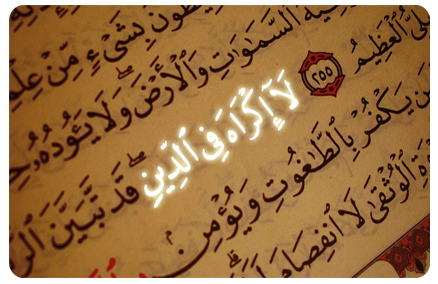
Let There Be No Compulsion in Religion
One of the fundamental truths established by the sacred texts is that no one can be compelled to accept Islam. It is the duty of Muslims to establish the proof of Islam to the people so that truth can be made clear from falsehood. After that, w...
-
How Do We Know God is One?
A Philosophical & Theological Perspective – The oneness of God, in Arabic tawhid, is a central theme in the Qur’an and a message of all of the Prophets, the Qur’an eloquently ...
-

Denying God, Denying Reality
Self-Evident Truths Does God exist? If God exists, what evidence is there to support this belief? I believe we have many good arguments which support a belief in God. We don’t require any evidence for His existence....
-
Scientific Miracles in Brief
Why Islam is the true religion of God. Most religions are based on books claimed by their followers to be divinely inspired, without any proof. Islam is based upon reason and proof. There are clear signs that the book of Islam, the Quran,...
-
The Challenge of the Quran
The Quranic challenge to produce a work similar to it, and the inability of its contemporaries to meet it. The Quran is not only unique in the way in which it presents its subject matter, but it is also unique in t...
-
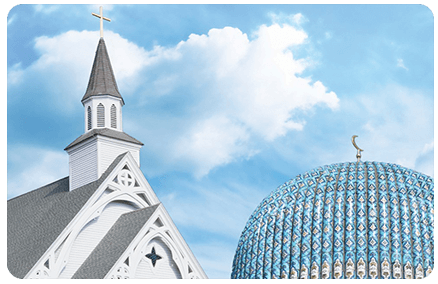
Islam & Christianity
The Bible Christianity, which claims to have nearly 1.2 billion adherents all over the world, is a Semitic religion. It owes its name to Jesus Christ (peace be on him) and the Holy Bible is the sacred scripture of the Ch...
-
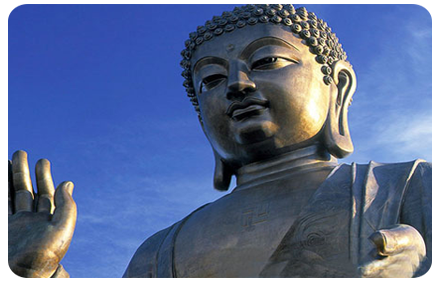
Islam & Buddhism
Historical criticism has proved that the original teachings of Buddha can never be known. It seems that Gautama Buddha’s teachings were memorized by his disciples. After Buddha’s death a council was held at Rajagaha so that the ...
-
Islam & Atheism
God Existence – Atheists might assert that they don’t acknowledge the existence of God. Undeniably there are times — whether during the agonising days of a lingering illness, the seemingly eternal moments of a v...